Winter Shakedown: Appalachian Trail Prep in the Smokies
Before Springer Mountain, test yourself in the Smokies — a winter backcountry shakedown for aspiring Appalachian Trail thru-hikers.
Prepare for the realities of the Appalachian Trail in the winter backcountry of the Smokies.
This expedition is designed for aspiring thru-hikers and long-distance backpackers who want to test their gear, build confidence, and experience real trail conditions before stepping onto the Appalachian Trail.
Over three days in the backcountry of the Smoky Mountains, participants hike through rugged mountain terrain while learning how to manage the unpredictable weather, terrain, and logistical challenges common during the early weeks of an AT thru-hike.
The Smokies provide one of the most realistic training environments for this preparation, with high ridgelines, shifting weather, and true wilderness conditions.
Why Train in the Smokies
The Smoky Mountains contain one of the most challenging sections of the Appalachian Trail in the southern Appalachians.
The trail through the park climbs across high mountain ridges and spans more than 70 miles of rugged terrain, with significant elevation gain and exposure to rapidly changing weather conditions.
Winter conditions in the Smokies can vary dramatically. Temperatures may reach the 50s during the day while dropping below freezing at night, and higher elevations can receive heavy snowfall.
For many northbound hikers starting in early spring, these are the exact conditions they will face during their first weeks on the Appalachian Trail.
Training here provides a realistic introduction to the challenges of long-distance backpacking.
The Training Experience
This expedition blends traditional backpacking with practical instruction designed to prepare participants for extended trail travel.
During the trip, guides provide instruction and discussion on:
- pack weight and gear adjustments
- campsite selection in variable conditions
- layering systems and cold-weather management
- water treatment and trail logistics
- pacing and daily mileage planning for long-distance hiking
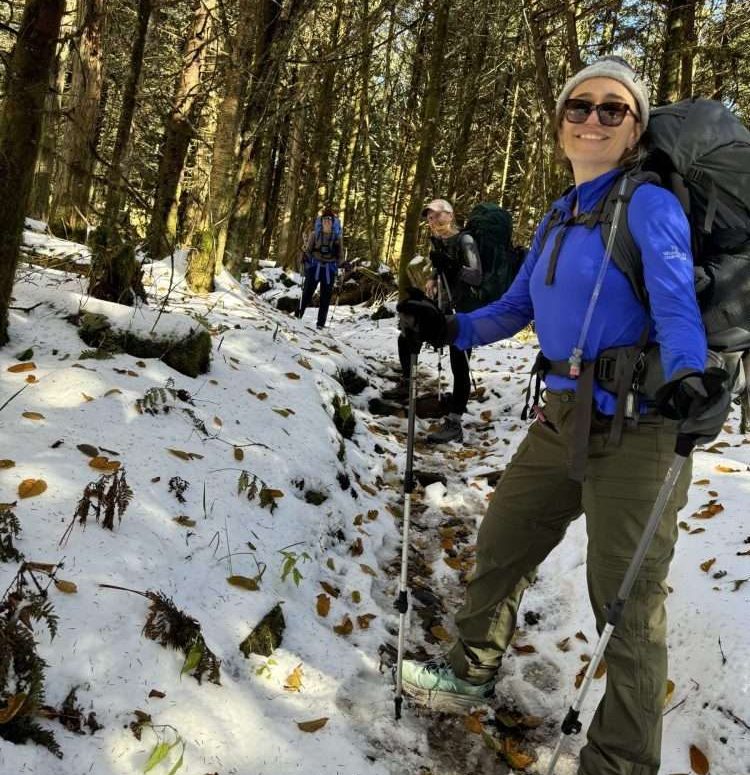
Participants gain hands-on experience managing gear, weather, and terrain while traveling through real backcountry conditions.
Evenings are spent at backcountry campsites discussing trail strategy, gear systems, and lessons learned from experienced long-distance hikers.
Quick Facts
Location: Great Smoky Mountains
Duration: 3 Days
Group Size: 2-7 Participants
Total Mileage: 18-25 Miles
Elevation Gain: Moderate
Terrain: Winter Forest, Creek Systems
Fitness Level: Active / Intermediate
Cost: From $749
Train for the Appalachian Trail: Winter Shakedown Overview
Our expedition begins this morning in Gatlinburg, Tennessee, where we meet our guides and fellow hikers preparing for the journey ahead. After introductions, we conduct a detailed gear shakedown and pack review, discussing pack weight, layering systems, and winter backcountry essentials commonly used on the Appalachian Trail.
Once packs are dialed in and group gear distributed, we transfer to the trailhead and begin hiking into the backcountry of the Great Smoky Mountains. Early miles provide the opportunity to settle into trail rhythm while guides discuss pacing strategies, efficient climbing techniques, and daily routines common to long-distance hiking.
As we hike deeper into the forest, participants begin experiencing the variable terrain and weather conditions typical of early Appalachian Trail travel. By late afternoon we arrive at our first backcountry campsite where we establish camp, prepare dinner, and review lessons from the day.
The evening often includes discussion around gear systems, cold-weather camp setup, and practical strategies for managing the realities of life on trail.
Dinner Included.
Mileage: varies between 3 – 5.5 miles depending on route selection with ±1,500–3,000 feet of elevation change.
Today offers a deeper immersion into the rhythms of long-distance hiking. After breakfast and breaking camp, we continue through the rugged terrain of the Smokies while practicing efficient pack management, pacing, and trail decision-making.
Depending on the route, we may travel sections of trail that closely resemble terrain found along the Appalachian Trail corridor, including steep climbs, ridge travel, and rocky mountain tread common to early thru-hike conditions.
Throughout the day guides provide instruction and discussion around:
- managing shifting mountain weather
- adjusting layers and moisture control
- campsite selection and backcountry logistics
- daily mileage strategies for thru-hiking
The goal is to simulate the experience of a real AT travel day while giving participants the chance to test gear, adjust systems, and build confidence in winter backcountry conditions.
Evening brings another opportunity to review gear choices, discuss trail strategy, and share insights from experienced long-distance hikers.
Breakfast and dinner included.
Mileage: varies between 6.5 – 10 miles depending on route with ±1,500–3,000 feet of elevation change.
Our final morning begins with the familiar rhythm of packing camp and preparing for another day on trail — the same routine hikers repeat hundreds of times during a thru-hike.
As we make our way toward the trailhead, guides help participants reflect on the lessons learned during the expedition. This often includes reviewing gear adjustments, pacing strategies, and practical takeaways that will help prepare for the early weeks of the Appalachian Trail.
The final miles offer time to enjoy the quiet forests of the Smokies while discussing next steps for upcoming thru-hikes and future backcountry adventures.
Breakfast Included.
Mileage: varies between 3 – 8 miles depending on route with ±1,500–3,000 feet of elevation change.
Why Professional Guidance Matters in Smoky Mountain Winters
Participants often leave with:
- lighter and more efficient pack systems
- improved cold-weather strategies
- stronger backcountry confidence
- a clearer understanding of daily trail routines
Professional structure allows:
- Terrain-informed pacing
- Risk mitigation
- Ecological literacy
- Efficient route strategy
Participant Experience
Inclusions
- Professional Guide Leadership
- Permits & Logistics
- Pre-Trip Planning Support
- Expedition Briefing Materials
- Gear Rental (tent, pack, pad, sleeping bag)
- Guide Gear (water filter, stove, fuel, 1st aid)
- Breakfasts, Dinners, Some Snacks
- Shuttle Transport to/from Trailheads
- Small Group Format
Exclusions
- Personal Items (toiletries, clothing)
- Preferred Comfort Food / Snacks
- Gratuity for Your Guide
- Airport Transfer
- Lodging before/after Trip
Enrollment Is Limited
Each expedition is limited to 6 participants to preserve instructional quality and terrain integrity.